
People are buying pre-owned luxury cars in India because they want a nice car with good features without paying a lot of money for a brand-new one. Cars from companies like BMW, Mercedes-Benz, Audi, Volvo, Jaguar, Lexus, and Land Rover become cheaper after a few years because they lose their value faster than regular cars. Just because a car is cheaper does not mean it is a good deal. There could be problems with the car that you do not know about, like repairs that need to be done or papers that are not in order. That is why you need to be careful when buying a pre-owned luxury car in India. You need to do your research, get a professional to check the car, make a budget that's realistic and find a seller you can trust.
Why Buying a Pre-Owned Luxury Car Requires Extra Care
Buying a regular used car and buying a luxury car are not the same thing. Luxury cars have engines, automatic transmissions, and other features that make them nice to drive, but they can also be expensive to fix if they are not taken care of properly. A car may look perfect in pictures. It could still have problems that you cannot see. The car may have been driven a lot. It may have been in an accident. Buyers need to know the history of the car before they make a decision.
The right car can be a thing to own. The wrong car can be a mistake. That is why buyers need to think about the cost of owning the car, not just the price they pay for it. They need to think about insurance, maintenance, and repairs.
Set a Realistic Total Budget
One of the biggest mistakes buyers make is spending their entire budget on the purchase price.
If your total budget is ₹30 lakh, buying a car priced at exactly ₹30 lakh leaves no room for ownership-related expenses. Your actual budget should account for:
- Insurance renewal
- RC transfer charges
- Initial servicing
- Tyres and battery
- Extended warranty
- Unexpected repairs
- Fuel and annual maintenance
A slightly more expensive car with complete records, valid insurance, newer tyres, and recent servicing may actually be a better deal than a cheaper car that needs immediate work.
When you buy a pre-owned luxury car in India, the smartest budget is not the maximum amount you can spend on the car. It is the amount that allows you to buy, maintain, insure, and comfortably own the vehicle after purchase.
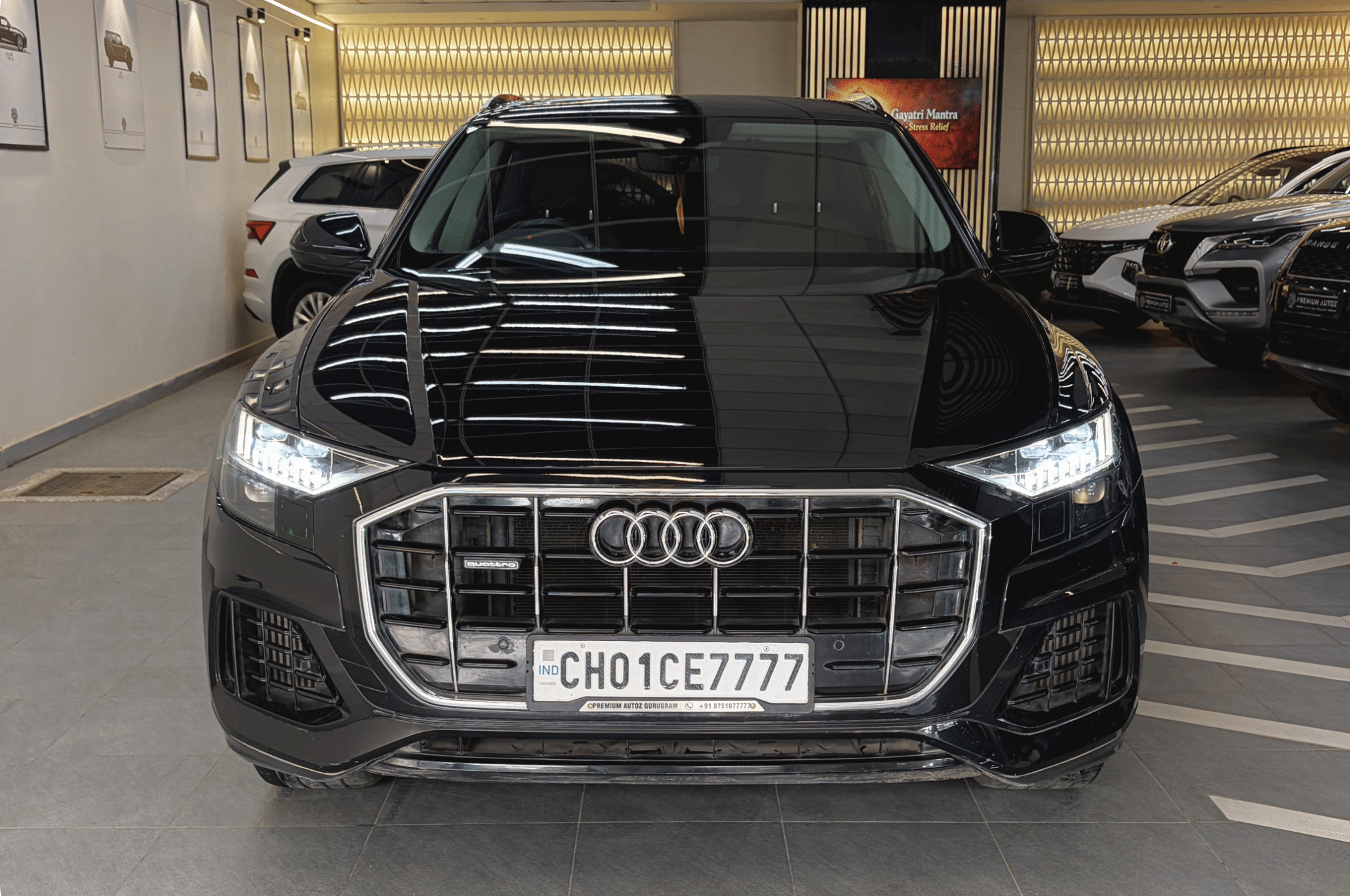
Choose a Car That Matches Your Lifestyle
When you are buying a car, do not think that a luxury badge is the thing that matters.
You should think about how you will use the car before you decide which one to buy.
A big diesel car might be very comfortable on the highway, and people will notice you. It might not be good for someone who drives short distances in crowded city traffic.
A luxury car might feel very nice and comfortable. If the ground clearance is low, it could be a problem on bad roads or when you are parking on a steep ramp.
You should also think about who will drive the car, how many people will be in the car how much you will drive the car every month, where you will park the car and how long you will keep the car.
The used premium cars in India are not always the fastest or the most expensive cars.
The best premium cars are the cars that match your routine, what you want in terms of comfort, how much they cost to run, and what you plan to do in the future with the premium cars.
The best pre-owned premium cars are the ones that match your needs and the premium cars that you will be happy with.
Check the Service History Carefully
Service history is very important when buying used luxury cars in India.
Ask for records from workshop invoices for maintenance and bills for services.
These papers show whether regular servicing was done on time and if big repairs were done properly.
When checking records, look for engine servicing work on the transmission, replacing brakes, fixing suspension, tyres, battery, air-conditioning work, and electronic repairs.
Don't just look at how many kilometers the car has been driven. A car with kilometres but complete service records can be a better buy than a car with low kilometres that wasn't taken care of.
If service history is missing, not complete, or not clear, be careful. This is a warning sign, so check the car carefully before deciding.
Get the Car Professionally Inspected
Even if the seller seems honest, get a check done before buying the car.
The check should cover these parts:
- Engine
- Transmission
- Suspension
- Steering
- Brakes
- Tyres
- Battery
- Air conditioning
- Panels
- Underbody
- All electronic features.
A diagnostic scan is very important. This is because luxury cars have sensors and control modules.
Warning lights might go away for some time. Stored fault codes can show problems that keep happening.
Ask the inspector to guess how much you'll need to spend in the near future.
This helps you understand the car's value. You can then negotiate based on facts. A small inspection cost can save you from a repair bill.
Verify Accident History and Documentation
Minor scratches and cosmetic repairs are common in city-driven vehicles. However, structural damage, poor-quality repairs, or flood history can affect safety, alignment, electronics, and resale value.
Check panel gaps, paint consistency, pillars, chassis areas, airbags, underbody condition, and insurance claim history. A repainted bumper may not be a major concern, but repaired pillars or chassis damage should be taken seriously.
You should also verify:
- Registration Certificate
- Insurance policy
- Ownership details
- Loan closure or NOC
- Pending challans
- Warranty documents
- Service records
- Transfer documents
If the car was financed, confirm that the loan has been cleared and the hypothecation has been removed properly. For an interstate vehicle, understand the applicable tax and registration requirements before making payment.
Proper documentation is just as important as mechanical condition.
Calculate the Total Ownership Cost
The price they are asking for is not what you will really pay to own a luxury car.
A luxury car that has gone down in value might be cheaper to buy. It will still be expensive to take care of.
You have to think about insurance, fuel, servicing, tyres, brake components, battery, suspension and repairs that you do not expect because these things can make the total cost a lot more.
Before you make a decision, you should make a plan for what it will cost to own the car for two years.
You need to add up the price of the car, any repairs you need to do, the cost of maintenance each year, insurance, fuel, and some extra money for repairs.
This will help you figure out if the car is really something you can afford after you buy it.
The car that is listed at the price is not always the best deal. A car that has been well taken care of, even if it costs more, might be cheaper in the long run.
Compare Multiple Cars Before Finalising
Never buy the first attractive car you see.
Compare at least three options based on model year, variant, kilometres driven, ownership, service history, accident history, insurance, condition, warranty, and asking price.
Two cars of the same model and year can have very different values. One may have lower kilometres but poor maintenance records, while another may have higher running but a complete service history and recent maintenance.
The right question is not:
“Which car is cheapest?”
The better question is:
“Which car offers the best balance of condition, history, reliability, features, and future cost?”
Understand Certified and Regular Pre-Owned Cars
Not every car marketed as “certified” has gone through the same process.
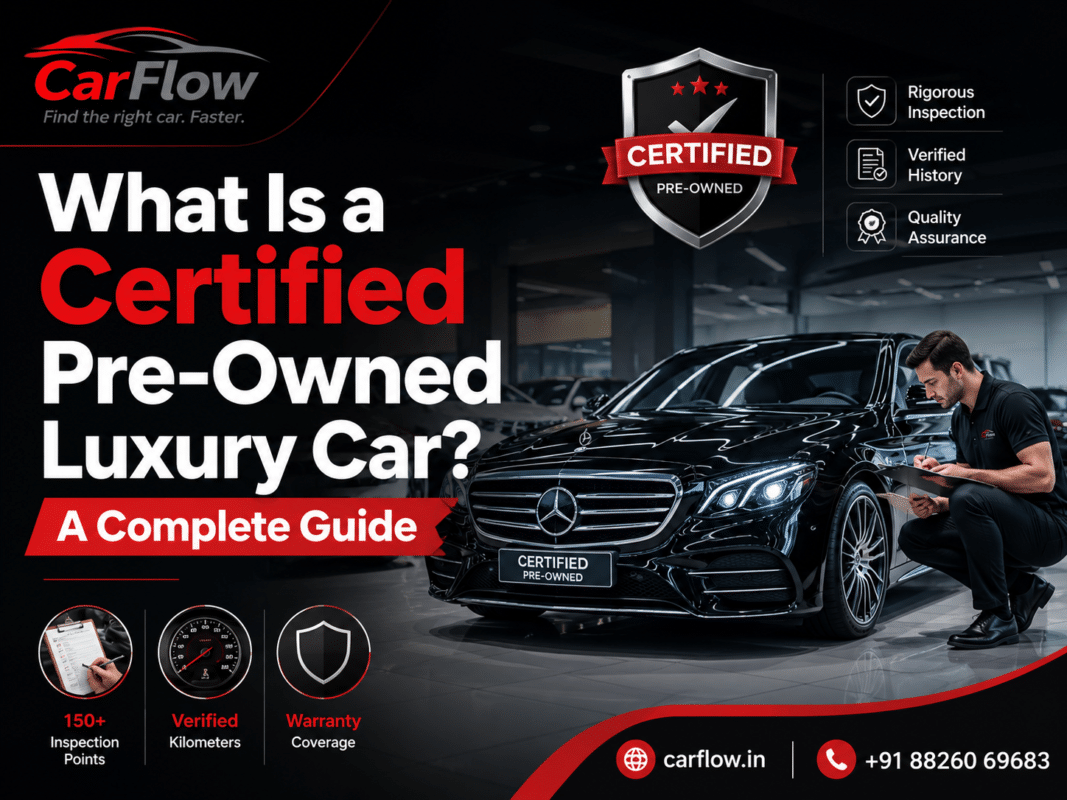
Certified pre-owned luxury cars in India may undergo mechanical inspection, electronic diagnostics, service-history verification, ownership checks, and refurbishment. Some may also include limited warranty coverage.
However, buyers should still ask who issued the certification, what was inspected, what repairs were completed, and what the warranty actually covers.
Certification can reduce uncertainty, but it should never replace independent verification.
How CarFlow Makes the Search Easier
Searching for luxury cars for sale in India can become overwhelming because buyers often browse several websites, speak with multiple dealers, and compare incomplete information.
CarFlow simplifies the discovery stage.
Buyers can share their budget, preferred brand, model, fuel type, transmission, location, and purchase timeline. Based on these requirements, CarFlow helps connect them with relevant options from verified dealers.
This reduces random searching and allows buyers to focus on cars that actually match their needs.
CarFlow makes the process more organised, but buyers should still complete inspections, documentation checks, and due diligence before finalising the purchase.
Conclusion
Buying a pre-owned luxury car in India can be a smart way to enjoy premium comfort, advanced technology, and strong performance at a more accessible price. However, the decision should never be based only on appearance, brand value, or a tempting discount.
Check the service history, mechanical condition, accident records, ownership documents, insurance, warranty, and future maintenance costs before making a decision.
Platforms like CarFlow can make the search easier by connecting buyers with verified dealers and relevant options. A great luxury car purchase is not about finding the lowest price. It is about finding the right car, with the right history, from the right source.
FAQs
Is it safe to buy a pre-owned luxury car in India?
Yes, provided the vehicle has a transparent history, complete documentation, professional inspection, and a credible seller.
Are certified pre-owned luxury cars in India worth the extra price?
They can be worth it when certification includes proper inspection, refurbishment, and useful warranty coverage.
What should I check before buying?
Check service history, accident records, RC, insurance, loan status, tyres, battery, electronics, engine, transmission, and suspension.
How much should I keep aside for maintenance?
There is no fixed amount. It depends on the brand, model, age, condition, and complexity of the vehicle. Always keep a separate repair reserve.
How does CarFlow help?
CarFlow connects buyers with verified dealers based on their budget, location, and requirements, helping them discover relevant options with less confusion.