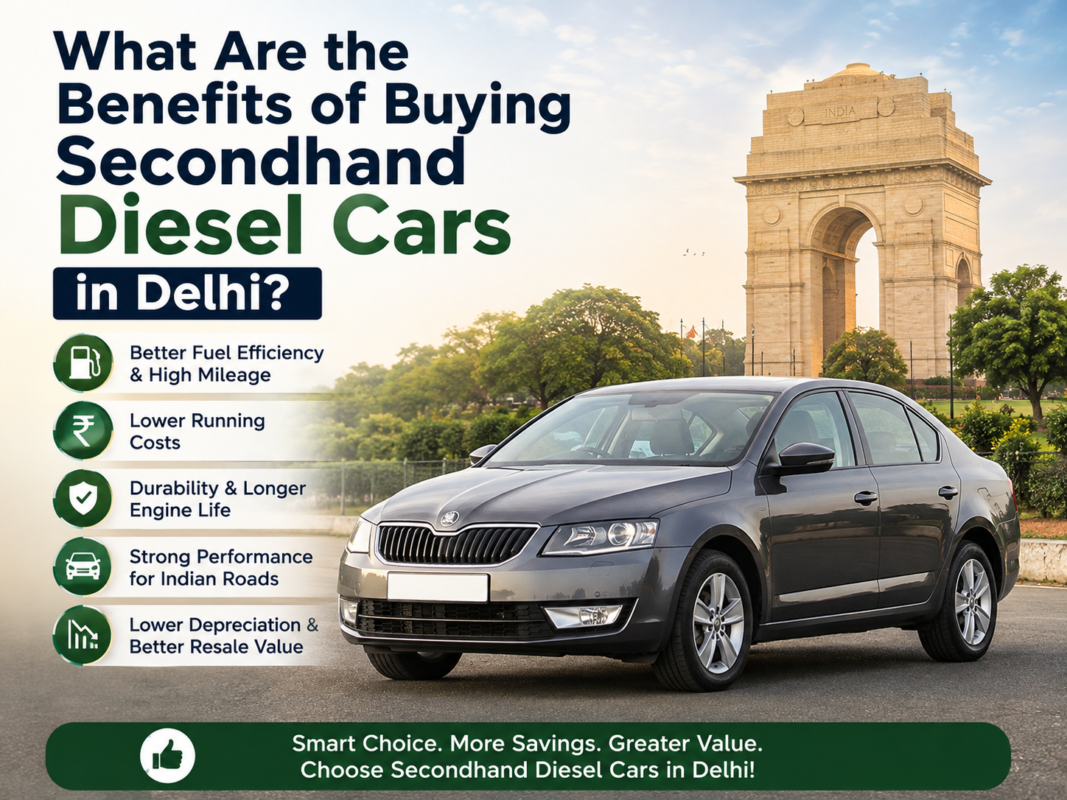


Finding the right car from premium used car dealers in Delhi can save you a lot of money, but only if you know what to compare before making a decision. Premium used cars often look attractive because the depreciation has already brought down their price significantly. A BMW, Mercedes-Benz, Audi, Volvo, Jaguar, or Land Rover that once cost much more can suddenly seem within reach. The problem is that buyers often focus only on the asking price. They may ignore service history, ownership, insurance, tyres, pending repairs, variant differences, and actual market value. That is where overpaying happens. If you want to buy premium used cars in Delhi smartly, you need to compare the complete ownership profile of the car, not just the number written on the listing.

Why Do Buyers Overpay for Premium Used Cars?
Premium cars do not have one fixed “correct” price in the used market.
Two cars of the same model and year can have very different values depending on kilometres driven, number of owners, service history, accident record, registration, insurance, tyres, battery, variant, and overall condition.
For example, one 2021 luxury sedan may be priced slightly lower but need a major service, new tyres, and insurance renewal. Another car may cost ₹1 lakh more but come with complete records, recently replaced tyres, valid insurance, and no immediate repair requirement.
The cheaper car may actually cost more after purchase.
This is why buyers should never ask only:
“How much is the car?”
A better question is:
“What am I getting for this price?”
The more information you have before negotiating, the less likely you are to overpay.
Compare More Than One Car
When you are buying a car, it is really easy to pay much money.
This is because people often buy premium cars because of how they feel.
They see a car that's a certain color or has a certain interior,, and they think it is the perfect car for them.
They like the alloy design or the top-of-the-line version. They feel like they have found the car they want.
This is when you need to compare cars.
Before you make a decision, you should look at least three cars that are similar to the one you like.
You should compare the year the car was made, the type of car, how many kilometres it has, who owned it before, the history of maintenance, what kind of condition it is in, if it is registered, if it still has a warranty, and the price.
This will give you an idea of what people are paying for cars like the one you want.
If one person is asking for a lot of money than the others, you can ask them why they want so much money for the car.
Maybe the car is a version, or maybe it has not had many owners,, or maybe it still has a warranty, or maybe it just got some expensive repairs.
Sometimes the high price is fair. Sometimes it is not.
Comparing cars helps you figure out if you are paying a price for the car you want to buy.
You can compare cars. Make a good decision about which premium car to buy.
Do Not Compare Only by Model Name
A common mistake is comparing two cars just because both are, for example, BMW 3 Series or Mercedes C-Class.
Variant matters.
A higher trim may offer a more powerful engine, better interior, additional safety features, upgraded sound system, larger wheels, or more technology. A different engine or transmission can also change market value and ownership cost.
This is particularly important when you buy premium used cars in Delhi, because luxury manufacturers often sell several variants that look almost identical from the outside.
Before comparing prices, confirm the exact model year, variant, engine, transmission, and equipment level.
Otherwise, you may think one car is overpriced when you are actually comparing it with a lower-spec version.
Service History Can Be Worth More Than Low Kilometres
Low kilometres attract buyers immediately, but they should not be treated as proof of good condition.
A 35,000 km car that missed services or spent years standing unused may require more work than a 60,000 km car that was maintained regularly.
Ask for workshop records and service invoices wherever available.
Look for consistent maintenance and check whether expensive items such as brakes, tyres, suspension parts, battery, transmission service, or major fluids have recently been replaced.
A well-documented car gives you two advantages.
First, you understand how the vehicle has been maintained.
Second, you get a clearer idea of what expenses may come next.
That information can prevent you from paying a premium simply because the odometer looks attractive.
Get the Car Inspected Before Negotiating
Negotiation becomes much easier when you know the actual condition of the car.
A professional inspection can reveal issues that are difficult to spot during a normal test drive, including worn suspension components, repainting, underbody damage, battery weakness, brake wear, fluid leaks, or electronic faults.
For premium cars, a diagnostic scan is especially useful because these vehicles contain several electronic modules and sensors.
Suppose the seller is asking ₹28 lakh.
The inspection reveals that the tyres need replacement, the battery is weak, and the next major service is due soon.
You now have a factual reason to negotiate rather than simply saying, “Best price kya hai?”
Negotiating with actual repair costs is far more effective than asking for a random discount.
Check the Real Cost After Purchase
A premium used car can be affordable to buy but expensive to bring back to perfect condition.
Before finalising, calculate what you may need to spend in the first six to twelve months.
Consider:
- Insurance renewal
- Initial service
- Tyres
- Battery
- Brake pads
- Suspension work
- Warranty
- RC transfer
- Cosmetic repairs
A car priced ₹1 lakh below the market may not be a bargain if it immediately requires ₹1.5 lakh of work.
This is why smart buyers calculate the landing cost of the car, not just the selling price.
Your landing cost is essentially:
Purchase price + immediate expenses required to make the car ready for comfortable ownership.
That number gives you a much better basis for comparison.
Understand Ownership and Registration
Ownership count can influence resale value, but it should not be considered in isolation.
A well-maintained second-owner car can be a better purchase than a poorly maintained first-owner car.
What matters more is whether the ownership history is clear and whether the documents match the seller’s claims.
Check the RC, insurance, loan status, pending challans, and registration location. For cars registered outside Delhi, understand any applicable transfer or tax requirements before making payment.
Also pay attention to the age and fuel type of the car, because Delhi-NCR has specific rules affecting older vehicles.
A cheap car with limited usable registration life may not offer good long-term value.
Do Not Let a “Luxury Discount” Rush You
Premium cars are often marketed using urgency:
“Only one car available.”
“Another buyer is coming today.”
“This price is valid only till evening.”
Sometimes that may be genuine. But urgency should never replace verification.
If you have not checked the car properly, compared similar options, reviewed the documents, and understood future costs, do not rush just because the deal feels exclusive.
There will always be another car.
Paying the right price for the right car is more important than being the fastest buyer in the room.
Choose Premium Used Car Dealers in Delhi Carefully
The dealer you choose can influence the entire purchase experience.
Good premium used car dealers in Delhi should be comfortable sharing available service records, ownership details, inspection information, and clear pricing.
Be cautious if a seller refuses independent inspection, avoids documentation questions, gives inconsistent answers about accident history, or pressures you to transfer money before proper verification.
Transparency matters more than showroom size.
A smaller dealer with a clean process and genuine inventory can be a safer choice than a large showroom that avoids basic questions.
The right dealer should make you feel more informed as the conversation progresses, not more confused.
How CarFlow Can Help You Compare Better
The biggest problem for people who want to buy expensive cars is not finding cars. It is finding cars that fit what they need without spending a lot of time talking to dealers who do not have what they are looking for.
CarFlow helps buyers share their budget and the type of car they want, where they're what they need, then links them with dealers that are trustworthy and have been checked. These dealers are more likely to have what the buyer really wants. Buyers can talk about prices. If the car is available directly with the dealers and set up test drives.
This makes it easier to compare because, instead of looking at hundreds of random listings, you can look at a smaller number of options that fit what you need.
This can be very helpful when you want to buy used cars in Delhi, where the condition of the car, the model, the service record, and how trustworthy the dealer is are just as important as the price.
CarFlow can make the search and matching part easier. Buyers should still check the car themselves and make sure all the papers are in order before finalising the deal.
Conclusion
Buying a premium used car without overpaying is not about finding the lowest-priced listing.
It is about understanding why one car costs more than another.
Compare multiple options, verify the exact variant, study service history, get the car inspected, calculate immediate expenses, and negotiate using facts.
The best deal may not be the cheapest car. It may be the one that requires the least unexpected spending after purchase.
If you are exploring premium used car dealers in Delhi, focus on transparent dealers who are willing to share information and let you properly evaluate the vehicle.
CarFlow can help make the discovery process easier by connecting buyers with verified dealers and relevant options based on their requirements.
The goal should be simple: buy the right premium car at a price that makes sense not only today, but after you have owned it for the next few years as well.
FAQs
How do I know if a premium used car is overpriced?
Compare at least three similar cars based on model year, variant, kilometres, ownership, service history, registration, condition, and warranty. A large price difference should have a clear reason.
Should I negotiate before or after inspection?
Ideally, inspect the car first. An inspection gives you factual reasons to negotiate based on tyres, servicing, repairs, battery condition, or other upcoming expenses.
Is a low-kilometre premium car always worth more?
Not necessarily. Service history and condition matter just as much. A higher-mileage car with complete maintenance records can sometimes be a better purchase.
How can I find reliable premium used car dealers in Delhi?
Look for transparent dealers who share available documentation, allow inspections and test drives, and provide clear information about ownership, history, and pricing. CarFlow also connects buyers with verified dealers based on their requirements.
What should I check before I buy premium used cars in Delhi?
Check the exact variant, service history, ownership, accident history, insurance, tyres, battery, mechanical condition, registration, warranty, and likely expenses after purchase.